
Introduction:
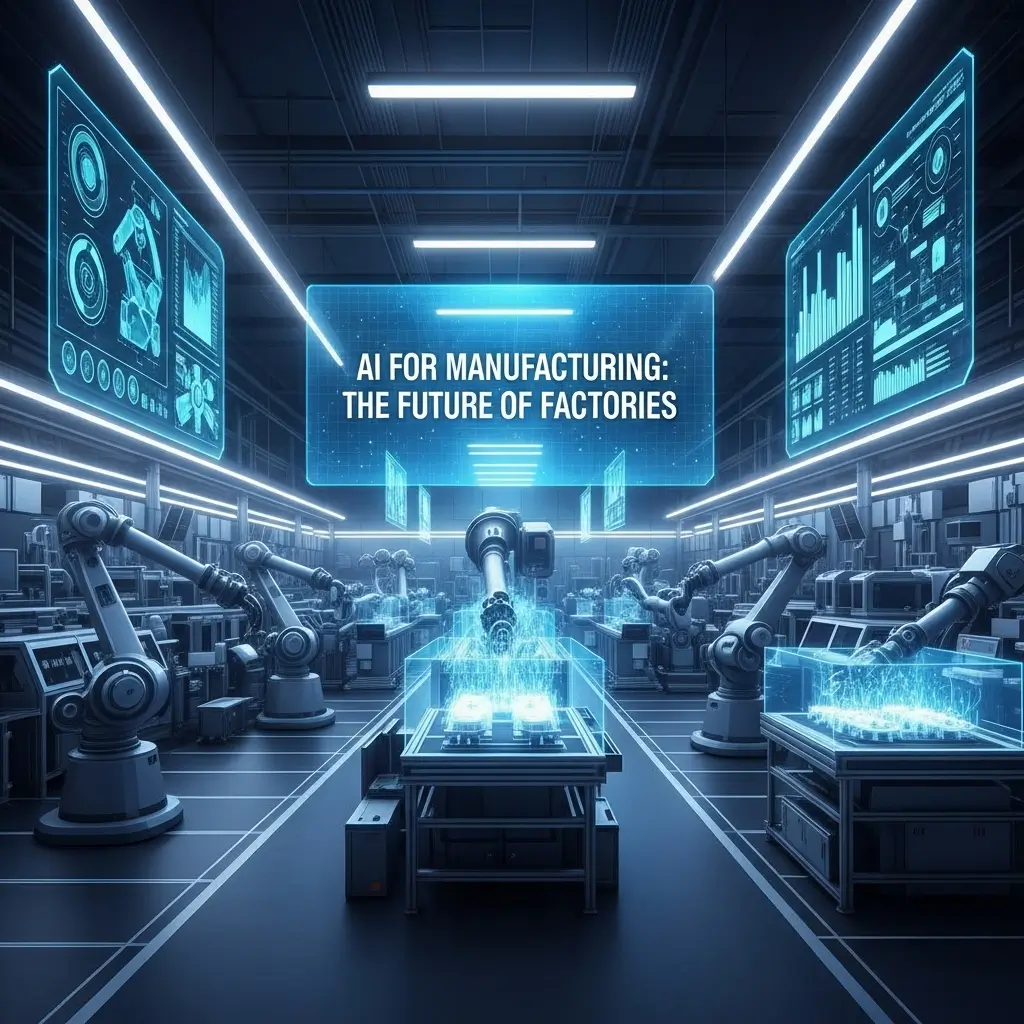
Artificial intelligence (AI) is transforming industries around the world, especially in manufacturing. As part of Industry 4.0, AI is driving innovation by enhancing efficiency, precision, and flexibility in production processes. By leveraging technologies such as machine learning, computer vision, and predictive analytics, manufacturers can optimize operations, improve product quality, and minimize downtime.
AI for Manufacturing is reshaping the industry, providing intelligent solutions that enable smarter, more agile production systems.
This blog explores how AI is reshaping the manufacturing industry, its key applications, benefits, and the challenges it presents.
Key Applications of AI in Manufacturing
1. Digital Twin Technology: Real-Time Monitoring and Optimization
Digital twin technology allows manufacturers to create virtual models of physical assets, production lines, and factories. By integrating AI with Internet of Things (IoT) sensors, manufacturers can continuously monitor and optimize production processes in real-time. Digital twins provide insights into performance, help predict maintenance needs, and allow for scenario testing without affecting actual production.
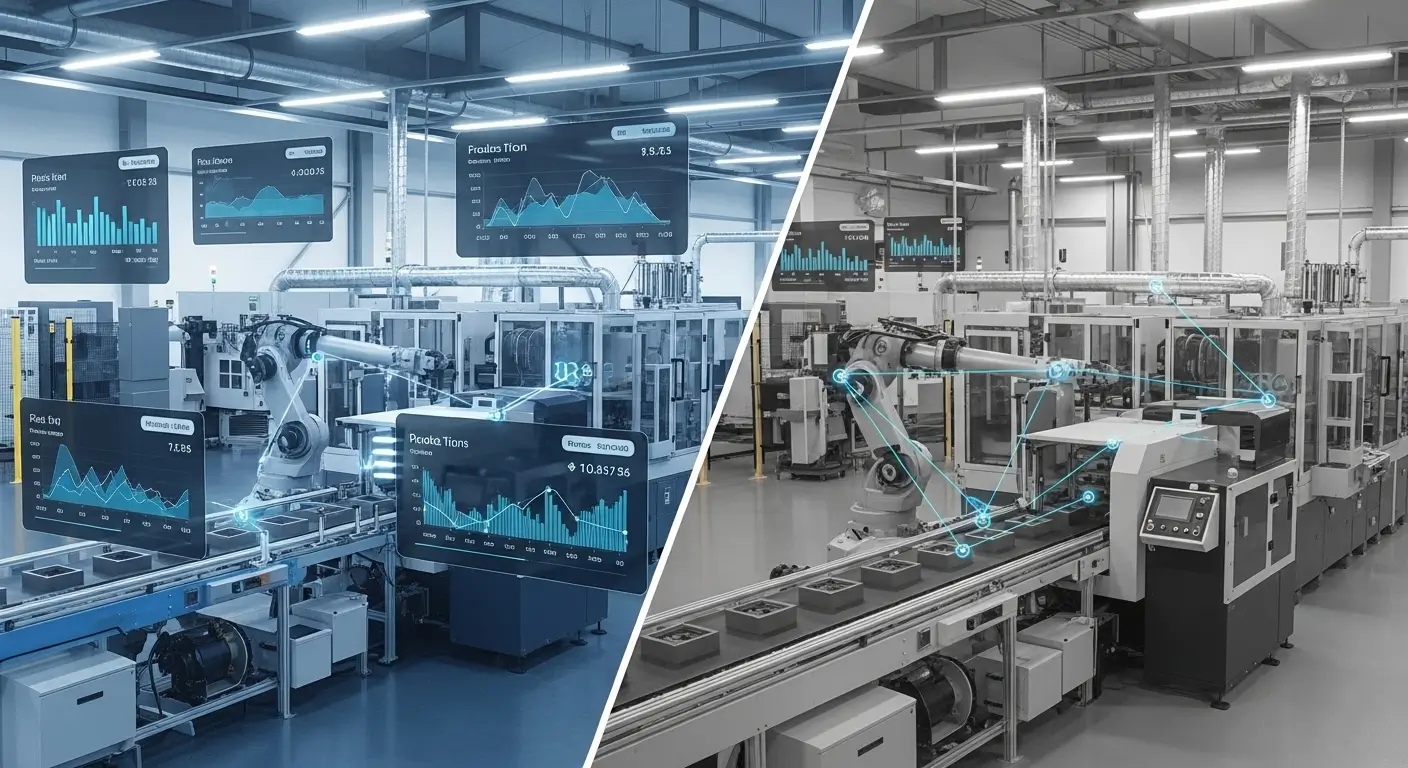
For example, a digital twin of a production line can simulate various speeds and production scenarios, allowing manufacturers to identify the best approach before implementation. This technology enables smarter decision-making and reduces the risk of disruptions in operations.
2. Predictive Maintenance: Minimizing Downtime and Maintenance Costs
One of the most impactful uses of AI in manufacturing is predictive maintenance. AI systems analyze data from machinery sensors to forecast when equipment is likely to fail. AI for Manufacturing reduces unplanned downtime and maintenance costs.
For example, in the food manufacturing industry, AI for Manufacturing can anticipate seasonal demand fluctuations, helping companies adjust their production schedules and manage resources more effectively.
3. Collaborative Robots (Cobots): Enhancing Human-Machine Collaboration
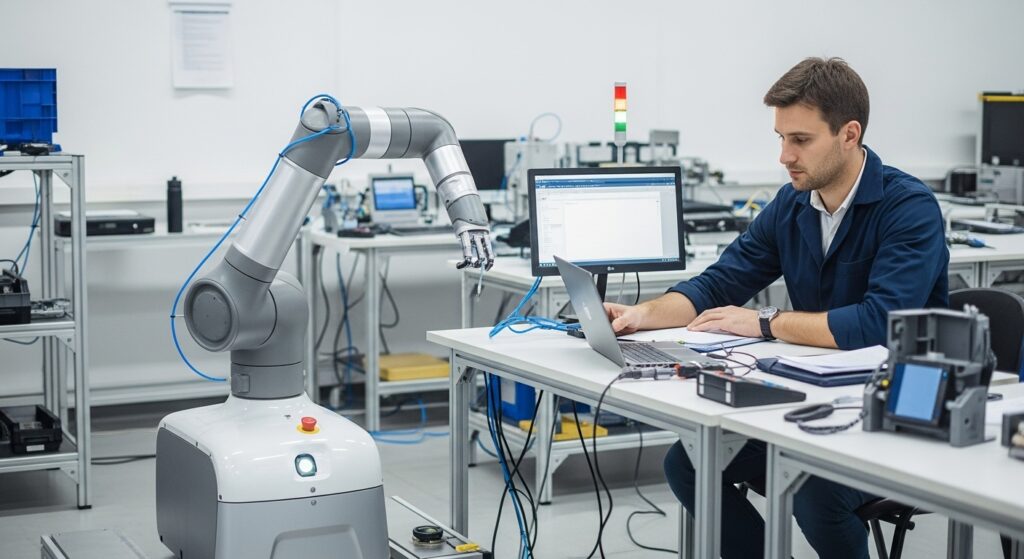
Collaborative robots, or cobots, are designed to work alongside human workers in manufacturing environments. Unlike traditional robots that require specialized, controlled environments, cobots can interact safely with humans, taking on repetitive, strenuous, or dangerous tasks. This allows employees to focus on more complex and creative work.
Cobots are widely used in electronics manufacturing for tasks such as precise component placement. They help improve both efficiency and accuracy in production, enhancing productivity while ensuring a safe working environment.
4. Generative Design: Accelerating Product Development
Generative design is an AI-powered process that helps manufacturers explore a wide range of design options based on specific parameters like materials, cost constraints, and manufacturing methods. The AI algorithms generate multiple design solutions, optimizing for strength, weight, and material usage.
This technology accelerates product development by enabling manufacturers to evaluate many design iterations quickly. For example, in the aerospace industry, generative design helps create optimized, lightweight parts that meet rigorous performance standards.
5. Quality Control: AI-Powered Precision
AI is revolutionizing quality control by automating the inspection process. Computer vision systems powered by AI can scan products in real-time and detect defects with much greater accuracy than human inspectors. This leads to fewer errors, better product consistency, and reduced waste.
In industries such as electronics, AI-driven quality control ensures that components meet the highest standards, which results in fewer defects and improved customer satisfaction.
6. AI in Supply Chain Optimization: Predicting Demand and Streamlining Logistics
AI enhances supply chain management by predicting demand, managing inventory, and optimizing logistics. By analyzing vast amounts of data, AI can forecast potential disruptions and recommend adjustments. When combined with digital twins, AI creates a virtual model of the entire supply chain, enabling manufacturers to predict shortages or disruptions before they happen.
For example, in the food manufacturing industry, AI can anticipate seasonal demand fluctuations, helping companies adjust their production schedules and manage resources more effectively.
Benefits of AI in Manufacturing
1. Increased Efficiency and Reduced Costs
AI-driven automation helps streamline production by automating repetitive tasks, reducing human error, and optimizing workflows. This leads to faster production cycles and lower operational costs. By integrating AI, manufacturers can achieve a “hands-off” production environment where processes are optimized in real time.
2. Improved Decision-Making
AI processes data from multiple sources, providing manufacturers with real-time insights that enable better decision-making. Digital twins, for example, allow manufacturers to simulate various production scenarios and test strategies before implementing them on the production floor. This helps minimize risks and enhances decision-making efficiency.
3. Enhanced Product Quality
AI improves product quality by enabling real-time quality control. Automated inspection systems powered by AI detect defects early in the production process, ensuring that only the highest-quality products are delivered to customers. This reduces waste, lowers costs, and improves customer satisfaction.
4. Sustainability and Energy Efficiency
AI also contributes to sustainability efforts in manufacturing. AI systems can optimize energy usage and minimize waste by monitoring production processes in real time. By identifying inefficiencies and suggesting adjustments, AI helps manufacturers reduce energy consumption and their environmental impact.
Challenges of Using AI in Manufacturin
1. Data Quality and Availability
For AI to be effective, it requires high-quality, structured data. Manufacturers often face challenges with inconsistent or incomplete data, which can impact the accuracy of AI models. Ensuring that data is reliable and well-organized is essential for the successful implementation of AI technologies in manufacturing.
2. Cybersecurity Risks
As AI technologies become more integrated into manufacturing processes, they increase digital connectivity, which can open new points for potential cyberattacks. Manufacturers need to invest in robust cybersecurity measures to protect sensitive systems and intellectual property from digital threats.
3. Workforce Adaptation
The rise of AI for manufacturing is changing the job landscape. While AI-powered automation improves productivity, it can also lead to job displacement in some areas. Manufacturers must manage this transition by offering retraining programs and reskilling opportunities for employees to adapt to new roles created by AI technologies.
4. Implementation Costs
Implementing AI technologies requires significant upfront investment in infrastructure, software, and training. While AI offers long-term benefits such as cost savings and efficiency, the initial investment can be a barrier, especially for small and medium-sized manufacturers. Manufacturers must weigh the costs of AI adoption against the expected return on investment.
Frequently Asked Questions (FAQ)
1. How does AI improve efficiency in manufacturing?
AI improves efficiency by automating repetitive tasks, optimizing workflows, and reducing human error. This leads to faster production cycles and lower operational costs.
2. What are collaborative robots (cobots)?
Cobots are AI-powered robots designed to work alongside human workers. They handle repetitive or hazardous tasks, allowing humans to focus on more complex and creative work.
3. How does predictive maintenance work?
Predictive maintenance uses AI to analyze sensor data from machinery, predicting when equipment is likely to fail. This allows maintenance to be scheduled in advance, reducing unplanned downtime and maintenance costs.
4. Can AI help improve product quality?
Yes, AI improves product quality by using computer vision systems to inspect products in real time. AI detects defects more accurately than human inspectors, ensuring that only high-quality products reach customers.
5. What are the challenges of implementing AI in manufacturing?
The challenges of AI adoption in manufacturing include data quality issues, cybersecurity risks, workforce adaptation, and the significant upfront costs associated with implementing AI technologies.
Conclusion:
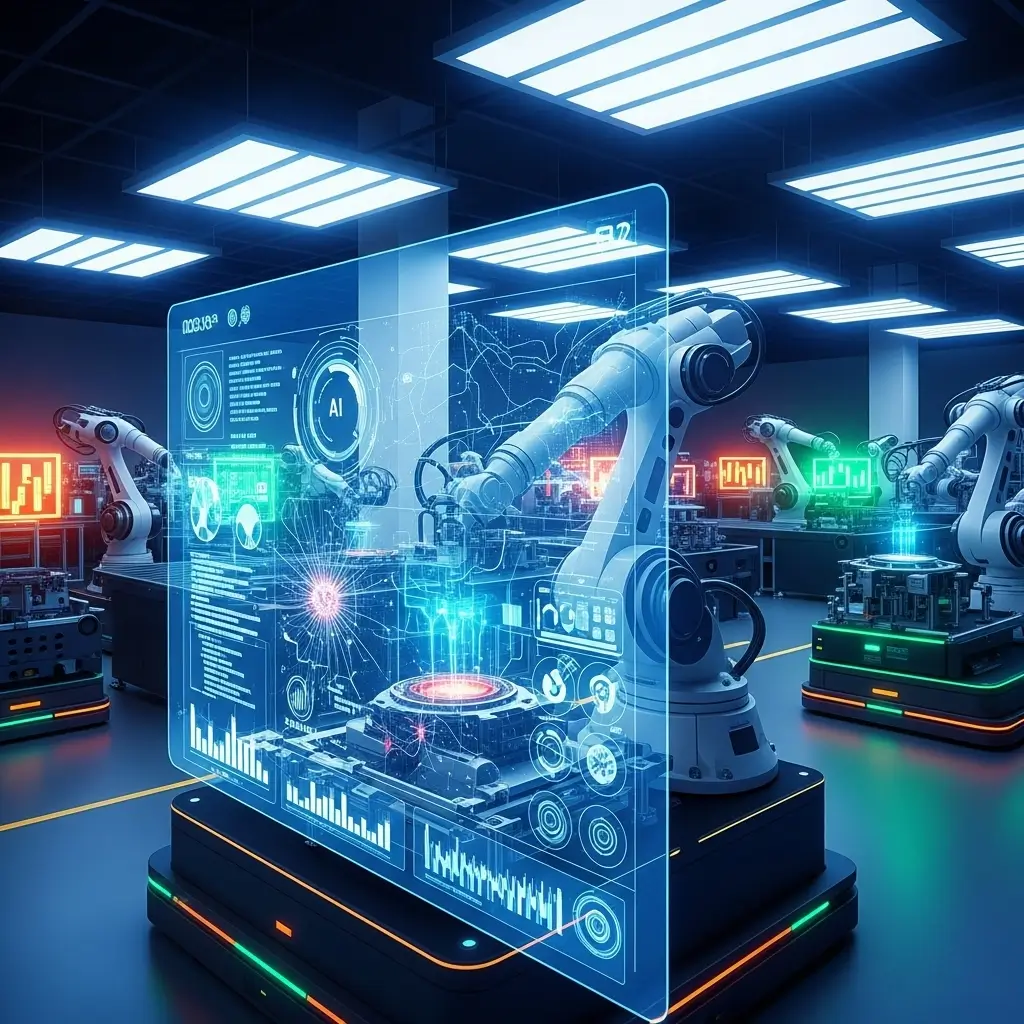
AI is revolutionizing the manufacturing industry by improving efficiency, enhancing product quality, and creating smarter, more sustainable operations. From predictive maintenance to collaborative robots and digital twins, AI is driving innovation and helping manufacturers stay competitive in an increasingly fast-paced market. However, challenges such as data quality, cybersecurity, and workforce adaptation must be addressed to ensure successful AI integration.
By leveraging AI, manufacturers can stay ahead of the curve, innovate faster, and maintain a competitive edge in an increasingly fast-paced global market.